

AI trusts what others verify. It recommends the business whose reviews, content, and third-party mentions all tell the same story. Here is how to become that business.
When someone needs a service now, more of them open ChatGPT or Gemini and ask instead of scrolling a page of links. So the question every established owner should sit with is simple: how do you get recommended by AI?
The answer is not a trick or a new channel to buy. AI recommends the business it can verify. When an assistant decides who to name, it does not take your word for it. It looks for the same story told in more than one independent place: your reviews, your own content, and the third-party sources that mention you.
We call that the trust stack. No single leg of it is enough on its own. The businesses that get named are the ones whose legs agree.
How does AI decide which businesses to recommend?
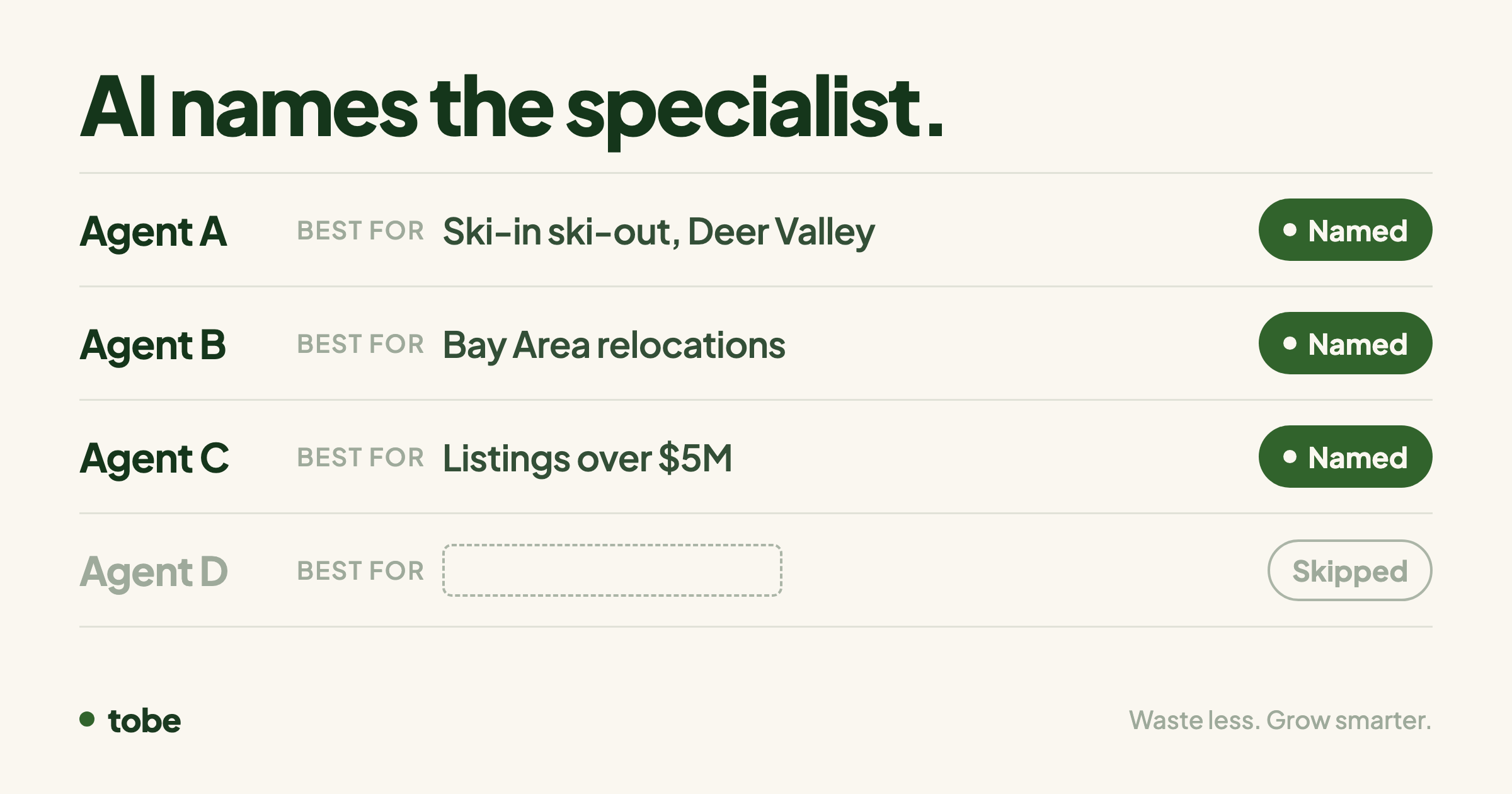
It cross-checks independent sources and names the business they agree on. An assistant builds its answer by reading many places at once (your reviews, directories, communities, articles, and your site) and looking for consistency. The business that appears, described the same way, across several trusted sources is the one it feels safe recommending.
Being excellent is not enough if the internet cannot confirm it. This is the shift from ranking a page to earning a mention, and it is why answer engine optimization (AEO) and generative engine optimization (GEO) are not a separate discipline. AEO is making sure an answer engine can find, verify, and recommend you. GEO is earning a spot inside the generated answer. Both are the next layer on the SEO you already run, and they compound with it.
We measured where AI's answers actually come from
We did not want to guess, so we tracked it. Across roughly 3,700 AI answers over three months, on questions like who is good at marketing, SEO, and related services, the assistants pulled overwhelmingly from independent third-party sources, not from the businesses' own websites:
- Reddit appeared in 28% of AI answers
- YouTube in 16%
- DesignRush (a provider directory) in 11%
- Clutch (a provider directory) in 8%
- Quora in about 7%
- LinkedIn in about 7%
The businesses AI named were the ones those independent sources had already vouched for. A company's own website, by itself, barely moved the answer. That is the trust stack, measured in our own tracking.
It lines up with outside data too. Domains with profiles on third-party platforms like Trustpilot, G2, and Yelp had roughly three times higher odds of being cited by AI (SE Ranking, November 2025). Different dataset, same lesson: the recommendation follows the independent proof.
The trust stack: the three legs
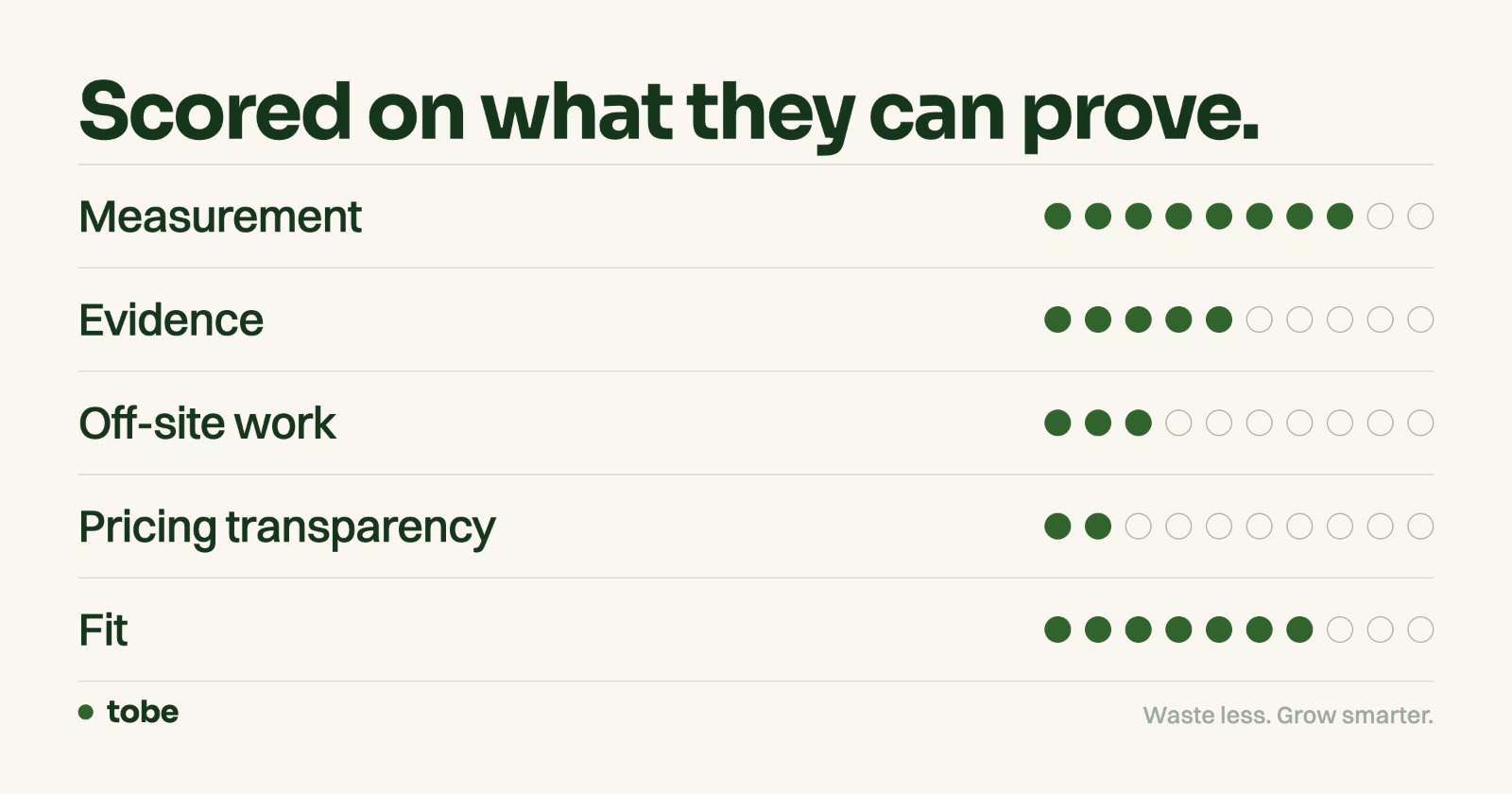
Here is the trust stack in one sentence: AI recommends the business whose reviews, owned content, and third-party mentions all tell the same story. Three legs, and you need all three.
Leg 1: Reviews
Real reviews on the profiles buyers and assistants both read: Google, Trustpilot, Yelp, and G2 for software. Volume and recency matter, and so does the profile being genuinely yours. Reviews are the most direct other-people-vouch-for-this signal there is, and they show up again and again in what AI quotes.
Leg 2: Your own content
The site you own, structured so a machine can understand it: clear entity information, schema markup, and a name, address, and phone number that match everywhere. Your content cannot be the only source, but it is the anchor the other sources get checked against. If your own story is thin or inconsistent, corroboration has nothing to line up with, and the assistant hedges.
Leg 3: Third-party citations and mentions
The independent voices: press and digital PR, listings on the directories that compare providers, and mentions in the communities where people ask for recommendations. This is the leg most owners ignore, and our own data says it is where AI does most of its reading. One credible mention in the right place can do more than a month of posting on your own channels. It is also what getting cited by AI really comes down to.
How do I make sure my website, social, and Google profile all say the same thing so AI recommends my business?
Make one source of truth and match everything to it. Decide the exact name, categories, description, and contact details you want to be known by, then align your website, your Google Business Profile, your social bios, and every directory to that same wording.
Assistants are pattern-matchers. When your channels agree, they read one confident entity and are comfortable naming it. When they disagree, the assistant hedges or picks someone clearer. Consistency is not busywork. It is what makes the corroboration possible in the first place.
Why one leg isn't enough
Because no single signal is reliable on its own, and even the analysts disagree on which matters most. Some say brand mentions are the strongest driver of AI citations. Others put the weight on links. Our own tracking says communities and directories do most of the heavy lifting.
The honest response to that disagreement is not to pick a side. It is to build the combination, so that whichever signal matters most in your category, you are covered. A business with great reviews and no mentions is invisible. A business with mentions and inconsistent details is confusing. All three legs, aligned, is what gets you named.
What this looks like in the wild
The businesses the assistants kept naming had one thing in common, and it was not the prettiest website. In our tracked measurement, the providers AI recommended all shared the same third-party footprint: they showed up in the directories that compare providers, they had real and recent reviews, and they were mentioned in the communities and articles the assistants read.
We are not naming them, but the pattern was consistent to the point of being boring. The recommendation followed the corroboration, every time.
How to build your trust stack, in order
You do not do all of it at once. You do it in the order that compounds.
First, make your owned content consistent: one name, one description, matching details everywhere, and basic schema so a machine can read you.
Second, turn on reviews and keep them recent on the profiles that count.
Third, earn the third-party mentions: get listed where your category is compared, and get into the press and communities where people ask for recommendations.
Foundation, then proof, then outside validation. That is the same order we run for clients, and it is the order AI reads in.
Frequently asked questions
How do established businesses get found in AI search instead of just Google?
By being verifiable across independent sources, not just present on their own site. AI reads reviews, directories, communities, and articles, then names the business those sources agree on. Established owners usually have the reputation already; the work is making the online footprint corroborate it.
Who can audit how my brand shows up across ChatGPT, Gemini, and AI search?
We do. Most analytics tools cannot show whether an assistant names you or what it says. A visibility audit queries the major assistants the way your customers do and reads each answer for whether you appear, how you are described, and which sources it quotes.
Which agency can help my business show up in ChatGPT and AI search results?
Look for one that measures your presence across the assistants and works all three legs of the trust stack (reviews, owned content, and third-party mentions) rather than selling a single tactic. That combined approach is what moves AI recommendations.
What is the best approach to AI search optimization or answer engine optimization?
Build the trust stack in order: consistent owned content, real reviews, then third-party mentions and digital PR. AEO and GEO are the next layer on solid SEO, not a replacement for it, and no single signal wins the answer alone.
Does SEO still work in the AI era?
Yes, more than ever. The same fundamentals that earn rankings (clear content, consistent details, reviews, and reputable mentions) are exactly what make you citable by an assistant. Good SEO is the foundation of good AI visibility.
Do reviews affect AI recommendations?
Strongly. Reviews are one of the most-quoted independent signals, and profiles on third-party platforms are associated with much higher odds of being cited. Recent, real reviews on the profiles that count are a direct input to whether you get named.
How long does it take to get recommended by AI?
Citation share, meaning what AI quotes about you, tends to move first, often within weeks, as new mentions and reviews get read. Being named consistently follows as the whole trust stack fills in. Anyone promising an overnight result is guessing.
Find out where AI can already find you
The hard part is that you cannot see your own trust stack from the inside. Who can audit how you show up across ChatGPT, Gemini, and AI search? We do exactly that. Our free SEO Second Opinion reads your reviews, your content, and your third-party footprint together, tells you which leg is weak, and gives you the fixes in priority order, whether you hire us or not.
Waste less. Grow smarter.